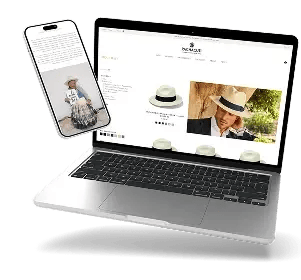
MANCHESTER WEBSITE DESIGN AGENCY
Design with purpose.
Turn your research into reality. We design clear, accessible, and user-centric websites. This means we focus more on how your target audience thinks and behaves, not how your org chart looks.
Not with our designs.
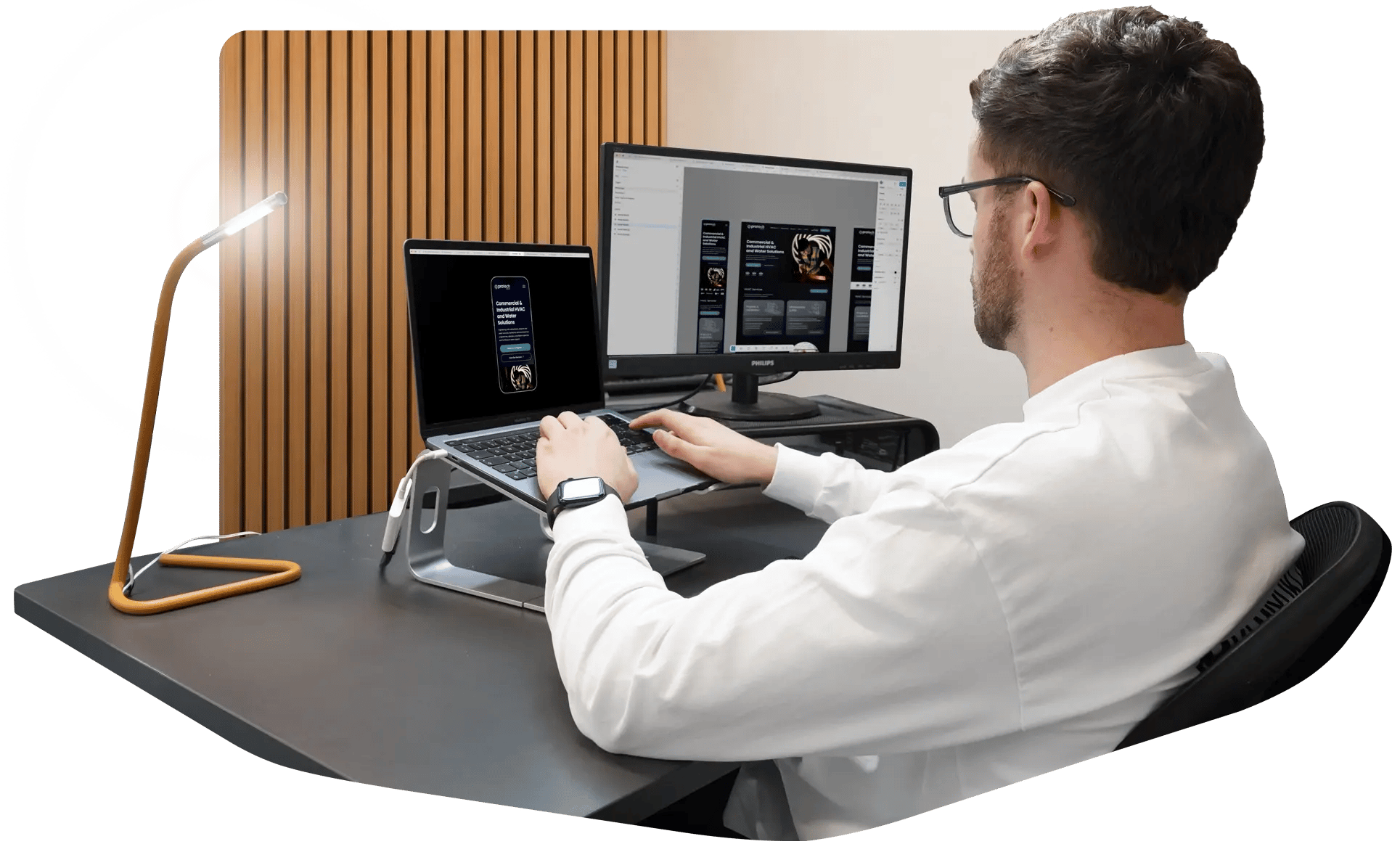
As a Manchester Website Design Agency, we combine UX and UI design under one roof, so the team thinking about how your product works is the same team deciding how it looks. That means fewer handoff problems, fewer assumptions, and a final design that your build team can move forward with confidently.
Every design goes through usability testing before it ever reaches a developer. By the time we hand it over, you already know it works.
Website design that works before it's built.
Most design processes end with a beautiful PDF. But no one's tested it, and the developer's got questions.
What Design looks like in practice.
Before pixels, there were pencils.
We sketch multiple versions of how your page could look quickly and collaboratively before committing to any single design.
Moving fast at the ideas stage means more options to evaluate, better decisions to make, and less time wasted going down the wrong path.
We design the structure and flow of your product around how real users think and behave, not how your internal team assume they do.
The result is a product that feels intuitive, reducing drop-off, increasing conversions, and cutting down on costly amends after launch.
We translate your brand guidelines into a visual interface that looks considered and feels cohesive, with typography, colour, spacing, and components, all working together.
A well-designed UI builds trust before a user reads a single word. First impressions are formed in milliseconds, and a polished interface signals that your business takes quality seriously.
We design how your product responds to user actions. Every tap, click, scroll, and transition feels intentional.
These smooth, predictable interactions reduce user frustration and keep people moving through your product rather than abandoning it.
Our specialists use considered animation and movement to guide a user’s attention and make your website feel alive.
Done well, motion makes a product feel premium and purposeful. Done badly, it gets in the way. So we make sure every animation earns its place.
We create bespoke icons and illustrations that communicate clearly and feel native to your brand, rather than reaching for generic stock.
Custom visuals strengthen brand recognition and help users navigate your product faster, especially in complex interfaces where clarity matters.
We design for every screen size from the start, so your product works just as well on mobile as it does on desktop.
Because with users searching for solutions on their phones, a site that isn't responsive isn't just frustrating, it's losing you customers.
Before anything gets built, we put your designs in front of real users to validate decisions and catch problems early.
Testing at the design stage is significantly cheaper than testing after build. It also means your developers aren't building something that needs to be immediately reworked.
We design to Web Content Accessibility Guidelines, making sure your product works for users with visual, motor, auditory, and cognitive needs.
Beyond being the right thing to do, an accessible design widens your audience, reduces legal risk, and often improves usability for everyone.
We build clickable, testable versions of your product before a line of code is written, so you can see and interact with it before committing to build.
Catching a fundamental design problem in a prototype costs a fraction of what it costs to fix it after development has started.
The small words matter. We write the buttons, labels, error messaging, and tooltips that guide users through your product without friction.
Poor micro copy is one of the most common, and most overlooked, causes of user confusion and form abandonment.
We design for what happens when things go wrong. Empty states, error pages, time-outs, and unexpected user behaviour.
Products that only work perfectly in ideal conditions frustrate users when reality kicks in. Designing for edge cases is what separates a polished product from an unfinished one.
How we turn an outline into an outcome.
1
Review your brief
Whether it came from your team, another agency, or ours during Define, we start by understanding the strategy, research, and goals behind the project.
2
Design sprints
First we’ll cover UX, then tackle UI. At every stage, you’ll see any work in progress, give feedback, and watch as your site takes shape. No big reveals. No nasty surprises.
3
Test before handover
The ultimate ‘try before you buy’. Clickable prototypes go through usability testing, so we know the design and experience works before a developer writes a single line of code.
Where are you in the process?
Meet the creatives behind your design.
Paul Donnelly
Associate Creative Director

Aaron Lockett
UX Designer
Test your design in a UX Lab.
Tested your new design with your team, but want to make sure it works for the intended audience?
Trial it in the UX lab.
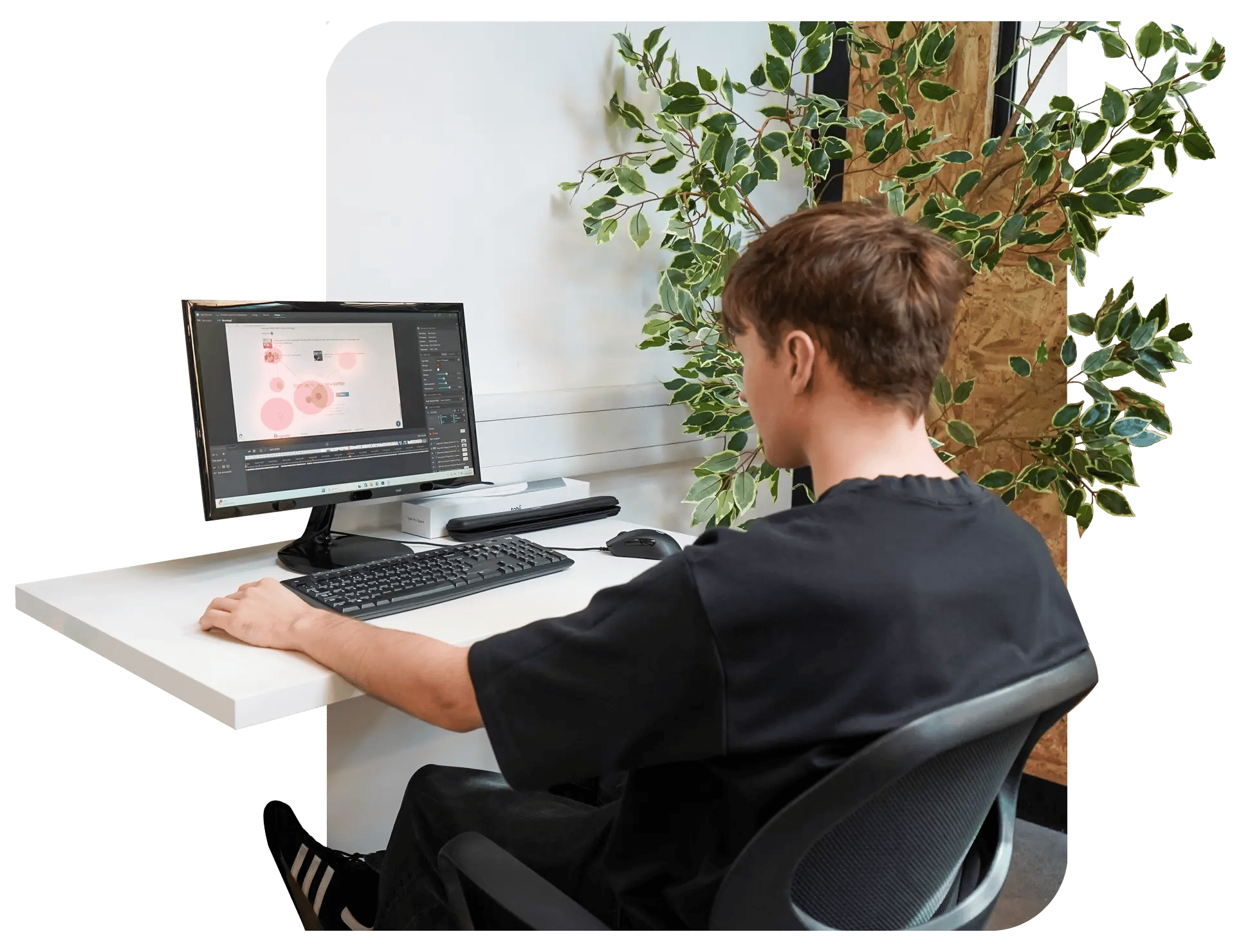
With state-of-the-art equipment, pre- & post-task interviews, and heat maps generated from eye tracking, our purpose built UX lab helps uncover any friction before designs go to development teams.
Common website design questions, answered.
UX design decides how something works, UI design decides how it looks.
UX covers structure, flow, navigation and the logic of how someone moves through your site. UI covers typography, colour, spacing and components.
They are frequently sold separately and split between teams, which is where most handover problems come from.
We do both in-house, so the people deciding how it works are the people deciding how it looks.
No. Every design is built from scratch around your business and your users.
Templates are faster and cheaper up front, and the cost arrives later when you need the site to do something the template was not built for.
If your budget genuinely suits a template, we will say so rather than sell you a custom design you do not need.
You will have seen it long before it is finished, so it should not be a surprise.
We work in design sprints with work-in-progress shared at every stage, which means feedback happens continuously rather than at a single reveal.
There is no point in the process where you see a finished design for the first time, because that is how projects end up in expensive rework.
Yes. If you have brand guidelines we design within them, translating them into a digital interface rather than reinventing your identity.
If your guidelines were written for print and do not cover digital states like hover, focus, error and disabled, we will extend them and hand back what we have added.
Yes, to Web Content Accessibility Guidelines, and it is part of the design process rather than a separate stage.
That covers colour contrast, focus states, keyboard navigation, text sizing and screen reader structure. Accessible design widens your audience, reduces legal risk and generally makes the site easier for everyone to use.
Yes. We build clickable prototypes and can put them in front of real users in our UX Lab before a developer writes any code.
Fixing a fundamental problem in a prototype costs a fraction of fixing it after build, and it means your developers are not building something that needs reworking immediately.
What our clients say.
SEO
CRM
Build
I think we did a good job of finding John’s balls
Johnny lost his balls, so we made a website to help him find them
elcap are the best agency I've worked with to date. Their willingness to deliver quality work in remarkable circumstances is testament to their entire team. They care and it shows.
A Person | Company